
Summary
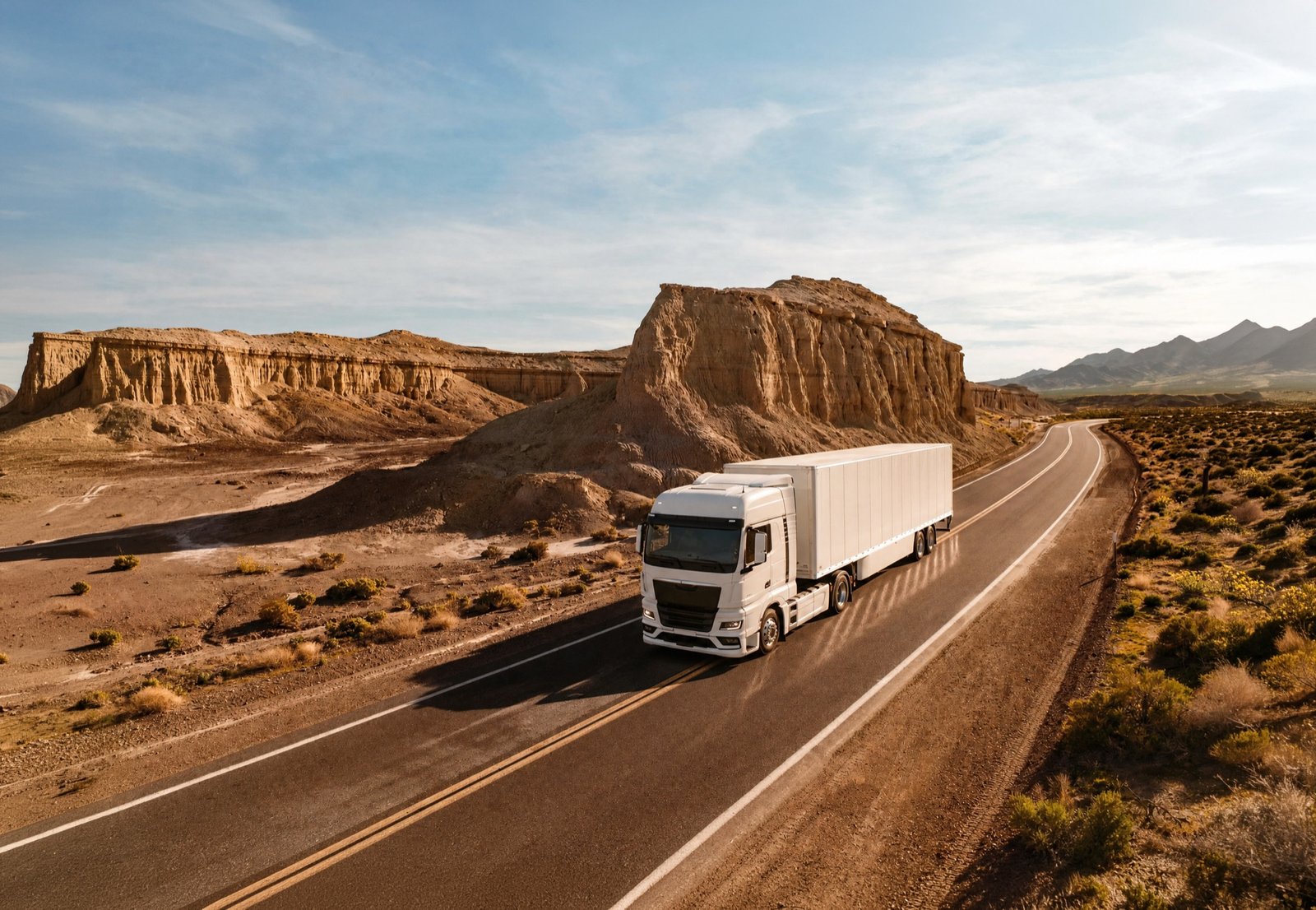
- Road is worth assessing when direct site access and flexible routing matter.
- Rail is worth assessing when the cargo and volume fit an available corridor and its schedule.
- Compare the collection-to-delivery plan, not only the main transport leg.
The short answer
Start with the Operation,
Not the Mode.
Road is worth assessing when direct site access and flexible routing matter. Rail is worth assessing when the cargo and volume fit an available corridor and its schedule. A combined solution may use both.
Compare collection-to-delivery plans, not just the main transport leg. Start with your cargo, delivery requirement and receiving site, then check which options can meet them.
The European Commission describes combined transport as using road for the first and last legs, with modes such as rail for the main leg. That makes the choice more useful than a simple road-versus-rail label. [1]
Side by side
Compare the Same Journey.
Use the same origin, destination, cargo profile and required arrival window for both options. These are planning considerations, not service guarantees.
| Consideration | Road | Rail / road–rail |
|---|---|---|
| Access | Check vehicle access at the collection and delivery sites. | Check rail connections or terminals and the road legs needed at each end. |
| Schedule | Assess collection windows, distance and route conditions. | Assess departures, terminal cut-offs, transfers and final delivery. |
| Cargo and volume | Match the consignment to suitable equipment and available capacity. | Check loading-unit suitability, capacity and the volume pattern against the proposed service. |
| Handling | Clarify whether the plan is direct or includes consolidation and transfers. | Confirm loading, terminal handovers and any additional handling. |
| Evidence | Request a route-specific plan, inclusions and performance assumptions. | Request the same evidence, including the terminal and connecting-road scope. |
Operational fit
Different Strengths.
One Delivery Requirement.
When to Assess Road
Start with road when the plan needs direct access to your sites, collection flexibility or changes between delivery locations. Confirm vehicle access, cargo restrictions and the collection and delivery windows before treating that flexibility as available.
A recurring flow still needs a defined operating setup: volume forecasts, responsible contacts, handover points and what happens when the requirement changes. Explore Holsen’s road-freight planning approach.
When to Assess Rail or a Combined Solution
Assess rail where a suitable connection exists and the shipment pattern can work with its schedule and loading arrangements. Ask how the cargo reaches the terminal, who handles each transfer and how the final delivery is coordinated.
The procurement question is whether the complete proposal meets the requirement. Do not assume that a favourable main-leg offer settles the collection, handling or last-mile questions.
A comparable basis
Separate the Price from
the Full Operating Picture.
Request a breakdown that includes collection, main transport, terminal handling, final delivery and any stated surcharges. Check exclusions, waiting arrangements and the implications of a missed connection. Compare equivalent scopes rather than headline rates.
Use Emissions Data with Its Boundaries
EEA analysis finds rail freight more greenhouse-gas efficient than heavy-goods road transport on an average well-to-wheel basis. That is useful context, not an emissions result for your shipment. [2]
For a proposal-level comparison, ask which legs, energy sources, load assumptions and calculation boundaries are included. Keep those assumptions consistent across the options. No specific reduction or Holsen reporting capability is claimed by this example.
Before requesting a proposal
Prepare One Brief.
Compare Useful Answers.
Give each provider the same inputs so the proposals can be assessed against the same operation.
- Origin and destinationExact collection and delivery sites, access constraints and receiving hours.
- Cargo and equipmentDescription, packaging, dimensions, weight and specialist handling requirements.
- Volume and frequencyConsignment size, recurring flows, seasonal changes and forecast flexibility.
- Timing and exceptionsRequired arrival windows, tolerance for changes and escalation responsibilities.
- Evaluation criteriaCost inclusions, service measures, documentation and any emissions-data requirements.
Use the response to test whether the provider has understood the whole requirement. Review the evidence to request when evaluating a logistics partner.
Common questions
Before Choosing a Mode.
Is rail always cheaper than road?
No universal price conclusion follows from the mode alone. Compare route-specific proposals that include the same collection, delivery, handling and service requirements.
Can road and rail be used together?
Yes. Combined transport can use road at either end of a rail journey. Confirm the terminal connections, loading arrangements and responsibility for each stage. See the European Commission’s explanation.
Which option will meet our delivery window?
Assess the actual collection-to-delivery schedule. Include departure cut-offs, transfers, site opening hours and the response to exceptions. A generic mode label is not a delivery commitment.
Sources and review
The Basis for This Guide.
- European Commission — Multimodal and intermodal freight transport
Background on combining road legs with other transport modes.
- European Environment Agency — Rail and waterborne: best for low-carbon motorised transport
Average emissions-efficiency context; not a shipment-specific calculation.